
The experience of Guinea-Bissau
Setting the Scene
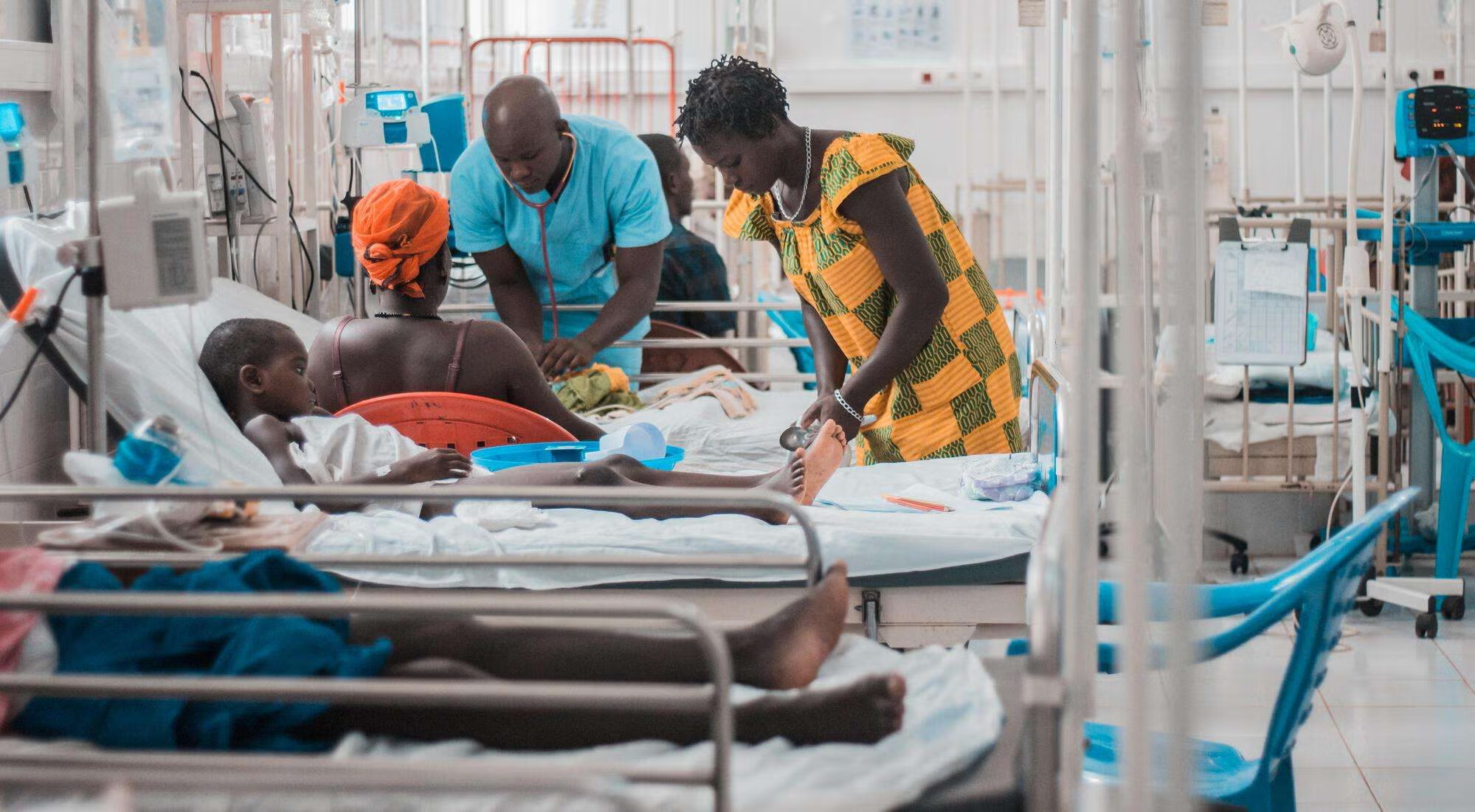
Setting the Scene Guinea-Bissau’s health system operates at central, regional and local levels, with public, private and traditional providers organised around the National Health Service. The Ministry of Public Health is responsible for overall management, regional structures analyse needs and plan resources, and local service delivery combines health-centre-based and community initiatives. The assignment took place in a context of political and institutional fragility, limited public resources and strong dependence on external financing.
The health system faced shortages of qualified professionals, limited service coverage, weak coordination and management capacity, and persistent public-health pressures including malaria, tuberculosis, cholera and HIV/AIDS. Maternal and child health remained a central concern, while access to services, essential medicines and reliable health information was uneven.
The European Union had already supported primary health care, maternal and child health and health-system governance through programmes including PIMI and IANDA Guinea Saude. The new programming exercise was framed by the Multiannual Indicative Programme 2021-2027 and the Annual Action Plan 2024, with the broader ambition of advancing Universal Health Coverage and strengthening Guinea-Bissau’s public-health institutions.
The Challenge at Stake
The Challenge at Stake The core challenge was to translate a complex and fragile health-sector environment into realistic, coherent and implementable EU programming documents. This required a clear understanding of the institutional framework, policies, financing constraints, stakeholder landscape and the most critical bottlenecks affecting health-system performance. Three priority areas stood out: weak leadership, planning and evidence-informed governance; constrained access to essential medicines and health products, including shortcomings across the supply chain; and an insufficient, unevenly distributed and inadequately supported health workforce.
These weaknesses limited equitable access to quality primary health care, particularly for women, children, people in vulnerable situations and communities in remote areas. The assignment also had to connect bilateral priorities with the regional action supporting African National Public Health Institutes, while integrating gender equality, disability inclusion, climate-related health risks, sustainable financing, ownership and long-term sustainability.
Turning Vision into Action
Turning Vision into Action The project’s official purpose was to support the Delegation of the European Union to Guinea-Bissau in drafting programming documents in the health sector. Its overall contribution was to facilitate the implementation of EU strategic actions under the AAP 2024 and the MIP 2021-2027, alongside the complementary DG INTPA regional action supporting National Public Health Institutes. The assignment focused on two principal products: a proposal for an Action Document to strengthen the health system towards Universal Health Coverage in Guinea-Bissau, and a proposal for a Concept Note under the regional initiative supporting African Public Health Institutes.
The work also included an inception report, an assessment of the health sector, an identification report and final reporting integrating feedback from the EU Delegation.
- Review the institutional and policy context, health-sector bottlenecks, programmes and stakeholders.
- Analyse health information systems, human resources for health and medicine management.
- Map current and planned interventions by government and technical and financial partners.
- Consult public institutions, development partners, NGOs, health facilities and other relevant beneficiaries.
- Formulate strategic options, risks, sustainability measures and realistic actions for EU support.
How We Made It Happen
How We Made It Happen The methodology combined documentary review, health-sector assessment, data and trend analysis, structured interviews, stakeholder consultations, focus groups and, where appropriate, visits to health institutions. Information was organised thematically to identify patterns, gaps, priority needs and areas where EU support could add the greatest value. The process was designed as iterative and demand-driven.
Draft outlines and programming documents were discussed with the EU Delegation, while additional consultations were planned to clarify expectations, test strategic choices and incorporate feedback. The local presence of the health and gender expert supported engagement with national stakeholders, while remote collaboration tools enabled the Team Leader to participate in meetings and coordinate the technical work. Eurecna led the assignment and was responsible for project and contract management, liaison with the EU Delegation, coordination of experts, logistics and quality assurance.
CUAMM provided technical health-sector support. The approach emphasised alignment with national and EU priorities, broad stakeholder ownership, realistic work planning, adaptability and integration with existing health systems.
Creating Impact
Creating Impact The assignment produced the analytical and programming foundations for future EU support to Guinea-Bissau’s health system. The documented outputs included an inception report with an updated methodology and work plan, a health-sector assessment process, and the preparation of programming documents focused on Universal Health Coverage and the strengthening of public-health institutions. The Action Document developed through the assignment set out an intervention centred on stronger health-sector leadership and governance, improved health information and surveillance capacity, more equitable access to essential medicines and health products, and better distribution and development of health workers.
It also incorporated gender equality, social inclusion, nutrition, disability inclusion, digitalisation and climate adaptation as relevant considerations. [Information not available in the source documents: evidence of health-system changes, beneficiary-level outcomes or longer-term impacts attributable to this programming assignment.]
Lessons for the Future
Lessons for the Future The project documentation highlights that health-sector programming in a fragile context must be grounded in a holistic assessment rather than isolated technical solutions. Governance, information systems, medicines, financing and human resources are interdependent, and progress towards Universal Health Coverage requires these dimensions to be addressed together.
- Align proposed interventions closely with national strategies, the EU programming framework and relevant regional initiatives.
- Involve institutions, development partners, service providers and communities early enough to build consensus and ownership.
- Use clear milestones, responsibilities and feedback loops, while retaining flexibility to respond to institutional change and data constraints.
- Integrate interventions into existing health systems and consider financing and institutional sustainability from the design stage.
- Maintain regular data collection, analysis and reporting to strengthen accountability and support evidence-informed decisions.
The experience is replicable for future formulation assignments where strategic programming must connect high-level policy objectives with locally validated needs. A combination of national expertise, international technical knowledge, iterative consultation and rigorous quality assurance can help produce programming documents that are both compliant with donor requirements and relevant to the operating context.